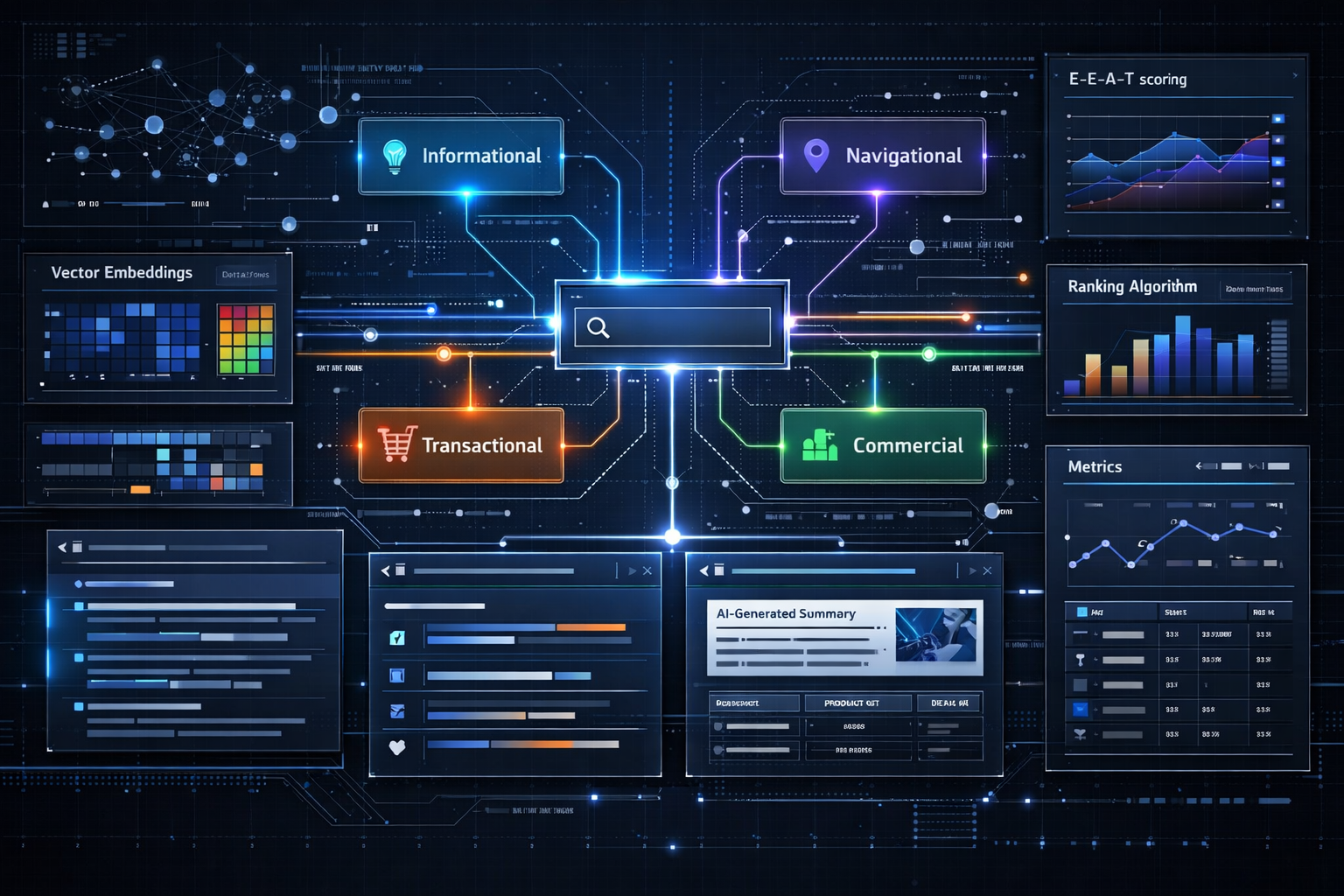
In the rapidly advancing digital landscape of 2026, understanding search intent is essential for SEO success. As AI-powered platforms like Google’s SGE, ChatGPT, Gemini, Grok, Perplexity, and Claude reshape search, rankings are determined by how well content addresses the true purpose behind user queries, not just keyword matches. Intent-optimized pages achieve significantly better click-through rates in AI-driven results.
At its core, search intent is the reason motivating a user’s search, guiding AI systems to deliver precise, satisfying responses. This comprehensive guide explores how search intent works, why it matters, and how to optimize for it—with practical strategies that work for businesses worldwide. Aligning your content strategy with search intent enhances performance in both traditional and AI-powered search environments.
For newcomers or established marketers alike, prioritizing search intent ensures your efforts yield meaningful traffic and engagement in this AI-dominated era.
What Is Search Intent 2026?
Search intent 2026, also known as user query intent 2026, represents the underlying goal of a search query in an age where AI interprets human language with remarkable accuracy. It goes beyond surface-level terms to consider context, such as user location or device, enabling engines to provide hyper-relevant results.
The main categories remain consistent but are amplified by AI:
- Informational: Seeking answers or education, like “how AI changes marketing in 2026.”
- Navigational: Finding a specific destination, such as “Nike official website” or “Amazon login page.”
- Transactional: Indicating purchase readiness, e.g., “buy running shoes online” or “order office furniture.”
- Commercial: Comparing options before buying, like “top AI SEO platforms reviews 2026.”
Informational intent dominates approximately 70% of searches, yet AI summaries increasingly resolve queries without clicks, rewarding content that directly fulfills user needs. Using semantic variations and clear entity mentions helps AI systems like Gemini properly categorize and surface your content in relevant queries.
This evolution ties into broader trends like voice search, where natural phrasing prevails. Internally, connect to our overview on Essential SEO Fundamentals to see how intent builds on basic principles.
Ultimately, search intent 2026 empowers AI to act as a mind-reader, making it indispensable for content creators to anticipate and satisfy user expectations effectively.
How Does Search Intent Work in the AI Search Era?
In 2026, search intent functions as the core mechanism in AI algorithms, analyzing queries to match them with the most appropriate content. Platforms like Google’s SGE employ advanced NLP to dissect intent, incorporating factors like query history and geolocation for personalized outcomes.
Breakdown of the workflow:
- Query Interpretation: AI parses the search—e.g., “best hiking trails near me” signals informational intent with location context.
- Intent Categorization: Systems classify it, using models trained on billions of interactions; Claude might tag it as commercial if price-related.
- Result Selection: Content is evaluated for alignment, with E-E-A-T playing a key role in credibility scoring.
- Delivery and Refinement: AI generates overviews or full results, learning from user feedback loops.
Intent-mismatched content experiences significant ranking drops in AI-powered search results. For example, a hotel optimizing for transactional intent keywords like “book luxury hotel [location]” rather than informational queries like “best hotels in [location]” will appear in more relevant AI-generated results and booking-focused searches, leading to higher conversion rates.
Incorporate semantic variations such as “search purpose in AI 2026” to aid entity detection. Leverage tools like Ahrefs’ Content Explorer for insights.
For a deeper learning path, check Coursera’s guide on SEO intent.
AI tools like Grok further personalize by predicting follow-up intents, so versatile content wins. Link internally to Introduction to Generative Engine Optimization for AI-specific mechanics.
With the majority of searches now occurring on mobile devices, search intent optimization prioritizes quick, location-aware answers that transform generic queries into targeted opportunities for businesses.
Why Is Search Intent 2026 Important for Rankings?
Search intent 2026 holds immense importance because it directly dictates how AI ranks and surfaces content, shifting focus from volume to value. In an era of information overload, mismatched intent leads to algorithmic demotion, while alignment fosters top placements.
Critical aspects include:
- AI Prioritization: Over 45% of queries are handled via generative summaries (BrightEdge 2025), where intent-matched pieces dominate.
- User Satisfaction Metrics: High dwell time and low pogo-sticking (returning to search) signal success, boosting rankings.
- Business Impact: Transactional intent drives 15% higher conversions; in competitive Rajasthan sectors, this means real revenue.
- Algorithmic Evolution: Google’s 2025 core updates emphasize intent, integrating it with E-E-A-T for holistic evaluation.
Businesses can leverage this effectively: A tour operator focusing on commercial intent keywords like “[destination] tour packages reviews” builds trust through comparison content, leading to navigational follow-ups like direct site visits as customers move through the decision journey.
Without proper intent optimization, content risks minimal visibility, as pages failing to match search intent receive a tiny fraction of available traffic.
Industry predictions highlight this in Search Engine Journal’s 2026 outlook.
Internally, reference Building E-E-A-T to understand how intent enhances authority signals.
Moreover, in 2026, intent’s importance extends to ethical AI use, ensuring content respects user privacy and avoids manipulation, which aligns with global regulations like India’s DPDP Act.
Step-by-Step Guide to Optimizing for Search Intent 2026
To harness search intent in 2026, follow this detailed optimization process, adaptable for any site.
- Identify Target Queries:
- Brainstorm with Google Suggest or AnswerThePublic for variations.
- Classify intents using SERP analysis—note if results show lists (informational) or shops (transactional).
- Develop User Personas:
- Create detailed personas based on your target audience demographics, needs, and search behaviors.
- Map their likely search queries at different stages of the customer journey.
- Create Aligned Content:
- Structure with question headings; add hooks like stats.
- Embed visuals or faceless Reels demonstrating intent examples.
- Apply On-Page Best Practices:
- Use meta tags and headers with intent keywords.
- Add schema markup: Product for transactional, Article for informational.
- Enhance Technical SEO:
- Optimize for speed and mobile; ensure crawlability for AI bots.
- Implement internal linking to related topics.
- Promote and Engage:
- Share on platforms like X, Instagram, and LinkedIn to gather user signals.
- For local businesses, optimize your Google Business Profile to match local search intent.
- Analyze Performance:
- Use Google Analytics for intent metrics; refine with A/B tests.
- Query AI tools like ChatGPT for content feedback.
- Iterate Based on Trends:
- Monitor updates; adjust for new AI behaviors quarterly.
Table: Optimization Tactics by Intent Type in 2026
| Intent Type | Key Tactics | Tools Recommended | Rajasthan Example |
|---|---|---|---|
| Informational | In-depth articles, FAQs | AnswerThePublic, SEMrush | “How does SEO work in 2026” |
| Navigational | Branded pages, clear navigation | Google Search Console | “Shopify login page” |
| Transactional | CTAs, secure checkout | Ahrefs, Shopify | “Buy laptop online free shipping” |
| Commercial | Comparisons, reviews tables | Trustpilot, Google Reviews | “Best CRM Software 2026” |
This How-To schema table facilitates AI extraction by systems like Grok.
Link internally to AI Tools Every Digital Marketer Needs for advanced analysis tools.
Scale by clustering content around intents, creating hubs that AI favors for comprehensive coverage.
Common Mistakes in Optimizing Search Intent 2026 and How to Avoid Them
Avoiding errors is key to success. Common issues include:
- Relying Solely on Keywords—Solution: Dive into SERPs; use intent classifiers in tools like SEMrush.
- Neglecting AI Testing—Test summaries in Perplexity to ensure alignment.
- Ignoring Local Intent Signals—For location-based businesses, optimize for geo-specific queries and local search intent in your service areas.
- Static Strategies—Refresh content bi-monthly; AI evolves rapidly.
- Ignoring Metrics—Focus on engagement over impressions; use Analytics dashboards.
Businesses that miscategorize search intent often see visibility drops. For example, treating an informational query like a transactional one (such as writing product pages for “fashion trends” instead of educational guides) results in poor rankings. Correcting intent mismatches typically restores significant organic traffic.
For more on pitfalls, consult Backlinko’s annual SEO review.
Link to Setting Up Google Search Console for tracking intent-related errors.
Additionally, steer clear of black-hat tactics; AI detects manipulation, leading to penalties.
Key Takeaways
- Search intent 2026 is AI’s guiding force for rankings—categorize and align accordingly.
- Using the right tools and matching local intent (when relevant) amplifies optimization effectiveness.
- Optimize with structures that AI crawlers love, such as tables and FAQs.
- Continuous analysis ensures adaptation in the dynamic AI search era.
FAQ
What defines search intent 2026?
It’s the purpose of a query, enhanced by AI for contextual relevance in 2026 searches.
How does AI alter user query intent in 2026?
AI like Claude personalizes and predicts, making intent matching crucial for summaries.
Why does local search intent matter?
Local intent optimization targets specific geographic audiences with relevant, location-specific content, leading to higher engagement and conversion rates for businesses serving local markets.
Which tools are best for AI search intent optimization in 2026?
Ahrefs for research, Google Analytics for metrics, and AI platforms for validation.
How frequently audit for search purposes in AI 2026?
Every 1-3 months, aligning with updates and performance data. Search intent optimization revolutionizes rankings in the AI search era, demanding precise, user-focused content strategies. Whether serving local markets or global audiences, aligning content with search intent turns queries into growth opportunities. Apply these insights to improve your search visibility.
Eager for more? Follow @lakshyasharma35 on X or subscribe for tailored insights. Optimize now!


Leave a Reply