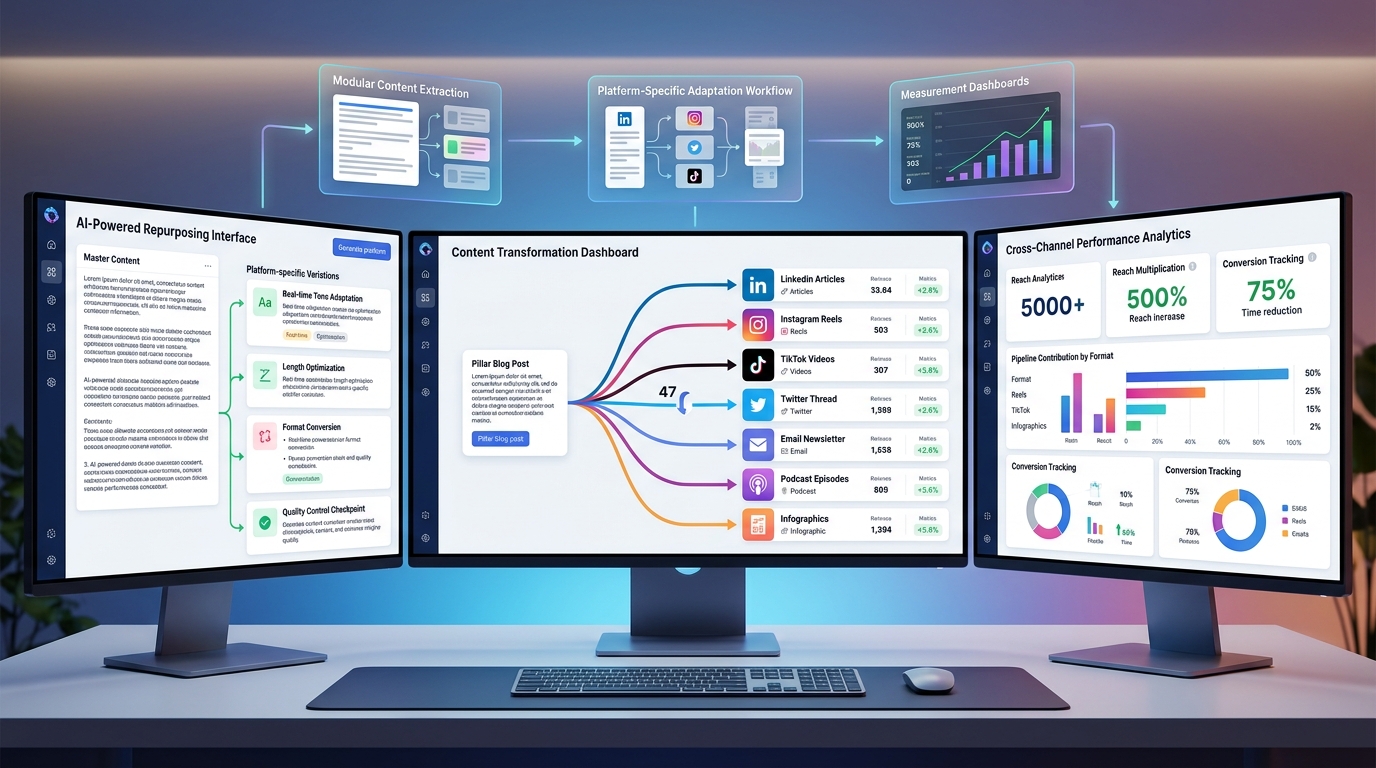
Businesses repurposing content see 30% increase in organic traffic while AI-powered repurposing can boost content reach by 500% and reduce production time 75%. Yet 73% of marketers struggle to maintain consistent content across multiple channels, and 49.4% simply reuse identical content across platforms without channel-specific adaptation. The gap between understanding repurposing benefits and executing strategically is massive. Single blog posts can fuel 47 pieces of content across seven platforms when systematically transformed, but most teams create unique content for each channel from scratch, wasting 75% of potential value from every created asset.
The shift isn’t temporary. It’s foundational to sustainable content marketing in 2026. Average content consumption increased 25% since 2025 as people engage across multiple platforms and devices throughout their days. Video accounts for 82% of all internet traffic while podcast listeners reached 500 million globally. The brands achieving 10 times more social media content from single blog posts while maintaining quality aren’t creating more. They’re implementing systematic repurposing frameworks where pillar content gets atomized into platform-specific micro-content, formats adapt to channel requirements automatically, and measurement reveals which transformations drive actual pipeline rather than just engagement metrics.
Success with content repurposing in 2026 doesn’t require massive content teams or expensive tools. It requires understanding how to identify high-performing pillar content worth multiplying, creating modular content structures that enable easy extraction and reformatting, and implementing channel-specific adaptation strategies that respect platform norms while maintaining core messaging. This guide shows you exactly how to repurpose content systematically across channels for maximum reach and measurable business impact.
Why Single-Channel Content No Longer Reaches Audiences
Consumer behavior fragmented across platforms, devices, and content formats. Creating content for single channels guarantees missing substantial portions of your target audience wherever they actually consume information.
Audiences Consume Content Across 10 Plus Touchpoints
B2B buyers engage with 10 or more channels during purchase journeys, up from five channels several years ago. This includes marketing emails, blog content, LinkedIn posts, sales calls, webinars, case studies, and industry events. The typical B2B buying group includes 6 to 10 stakeholders each preferring different content formats and platforms. Single-channel strategies miss decision-makers who never encounter your preferred platform.
Platform Algorithms Favor Native Content Formats
Each platform rewards content designed specifically for its format, audience, and engagement patterns. LinkedIn favors professional insight-driven posts while TikTok prioritizes short entertaining videos. Instagram emphasizes visual storytelling while email enables deeper dives with longer formats. Simply cross-posting identical content performs dramatically worse than platform-adapted variations. The 39.5% of teams tailoring content for each platform see substantially better results than 49.4% reusing identical content everywhere.
Content Saturation Makes Discoverability Harder
Organic reach declined across all major platforms as content volume exploded. Standing out requires presence across multiple channels where different audience segments discover content through their preferred paths. Repurposed content appearing on YouTube, LinkedIn, email newsletters, and blogs creates multiple discovery opportunities for same core message. This multi-channel presence compounds visibility impossible through single-platform approaches.
Identifying High-Value Pillar Content for Repurposing
Not all content deserves repurposing. Strategic selection focuses effort on proven performers that generated engagement, conversions, or valuable insights worth amplifying across channels.
Analyze Performance Data Across Key Metrics
Use analytics tools tracking page views, time on page, social shares, comments, and conversion rates. Content in top 20% across multiple metrics represents prime repurposing candidates. A blog post with 5,000 views, 15 social shares, and 3% conversion rate warrants transformation into videos, social posts, email content, and infographics. Mediocre content rarely improves through format changes alone.
Prioritize Evergreen Topics Over Trending News
Evergreen content maintaining relevance for months or years multiplies repurposing ROI versus time-sensitive news requiring constant updates. “How to conduct customer research” remains valuable indefinitely while “Q2 2024 industry trends” expires quickly. Focus repurposing efforts on foundational topics, frameworks, and educational content delivering sustained value rather than fleeting relevance.
Select Content with Clear Modular Structure
Content organized into distinct sections, frameworks, or step-by-step processes repurposes easier than stream-of-consciousness pieces. A guide with five specific strategies naturally becomes five separate social posts, video segments, or email sequences. Look for content containing statistics, quotes, frameworks, checklists, or actionable steps that stand alone when extracted from larger pieces.
Creating Modular Content Structures
Designing content as interchangeable components rather than monolithic pieces enables efficient repurposing across channels without requiring complete recreation for each platform.
Write in Self-Contained Sections
Structure every blog post, guide, or article as collection of standalone modules addressing specific subtopics. Each section should make sense independently when extracted. This modular approach allows pulling individual sections for LinkedIn posts, email newsletters, or video scripts without extensive rewriting. The investment in modular structure during initial creation pays dividends through dramatically easier repurposing later.
Extract Key Quotes and Statistics
Identify 10 to 15 quotable statements or compelling statistics within longer content. These become ready-made social media posts, email subject lines, or infographic data points. “Businesses repurposing content see 30% organic traffic increase” stands alone as valuable LinkedIn post even removed from surrounding context. Build library of extracted elements enabling quick social content creation.
Document Repurposing Workflows
Create checklists or templates defining exactly how each content type transforms into platform-specific formats. Document steps for converting blog posts into videos, podcasts into blog posts, webinars into social clips. This systematization enables delegation to team members and ensures consistent quality across repurposed content. The Gary Vaynerchuk “content atomization” model succeeds through documented repeatable processes, not ad hoc transformation.
Transforming Content for Platform-Specific Requirements
Each platform has unique technical specifications, audience expectations, and engagement patterns. Strategic adaptation respects these differences while maintaining core messaging consistency.
Adapt Long-Form Content for Short-Form Platforms
Turn 2,000-word blog posts into 60-second Instagram Reels, 90-second TikToks, or 280-character Twitter threads. Focus each short piece on single concept from longer content rather than cramming everything into abbreviated format. A comprehensive SEO guide becomes 10 separate TikTok videos each explaining one optimization tactic. This granular approach maintains depth while fitting platform constraints.
Convert Text Content into Visual Formats
Transform blog post statistics into infographics, key frameworks into slide decks, or step-by-step processes into carousel posts. Visual content drives 94 times more views than text-only posts on platforms favoring images and graphics. Tools like Canva enable quick conversion of text concepts into shareable visual formats matching platform specifications. The same data presented visually reaches audiences who skip text-heavy content.
Optimize Video Content for Audio Extraction
Extract audio from video content creating podcast episodes, audiograms for social media, or background content for email campaigns. A 45-minute webinar becomes podcast episode, its best soundbites become Instagram audiograms, and transcripts become blog posts. This multi-format approach serves audiences preferring audio consumption while maximizing video production investment.
Implementing AI-Powered Repurposing Workflows
AI tools dramatically accelerate content transformation enabling teams to generate 10 times more channel-specific content from single source without proportional time investment increases.
Use AI for Initial Content Atomization
Feed long-form content into AI tools requesting extraction of key points, quotes, and statistics. AI identifies core concepts and structures them as platform-specific posts. A 3,000-word article becomes 20 LinkedIn posts, 30 tweets, and 10 email newsletter segments through automated extraction. Human editors then refine AI output ensuring quality and brand voice consistency.
Generate Platform-Specific Variations Automatically
AI tools adapt tone, length, and format for different platforms from single master content. The same product announcement becomes professional LinkedIn update, casual Instagram caption, concise Twitter thread, and detailed email newsletter through AI transformation. This automation maintains 75% time savings while producing channel-appropriate variations humans would create manually.
Maintain Quality Control Through Human Review
AI accelerates production but requires human oversight ensuring accuracy, brand alignment, and strategic messaging. Every AI-generated variation should receive editorial review before publication. This hybrid approach combines AI speed with human judgment, achieving 10 times output increase without quality degradation that pure automation risks.
Measuring Cross-Channel Repurposing Performance
Proper measurement reveals which content types and transformation strategies drive actual business results versus just engagement vanity metrics.
Track Performance by Content Format and Channel
Measure which platforms and formats generate qualified leads, not just likes or shares. Video content might drive high engagement on LinkedIn while blog posts convert better via email. Image carousels could succeed on Instagram while failing on Twitter. This granular tracking guides resource allocation toward highest-converting repurposing strategies.
Monitor Pipeline Contribution from Repurposed Content
Use attribution modeling connecting content touchpoints to closed deals. Did prospects who engaged with repurposed LinkedIn posts convert at higher rates than those who only saw original blog content? Revenue attribution reveals true repurposing ROI beyond superficial engagement metrics. The brands achieving measurable growth track pipeline impact, not just social impressions.
Calculate Content Efficiency Ratios
Measure total reach and conversions generated per piece of pillar content across all repurposed variations. One blog post generating 10,000 total views when repurposed into videos, social posts, and emails delivers better efficiency than creating 10 separate unique pieces reaching same audience. This efficiency metric justifies repurposing investment through demonstrated reach multiplication.
Building Sustainable Repurposing Systems
Sporadic repurposing efforts produce inconsistent results. Systematic approaches embedding repurposing into core workflows create sustainable content engines multiplying impact without proportional effort increases.
Schedule Regular Content Audits
Review content library quarterly identifying top performers worthy of repurposing or refresh. Successful content from 12 months ago might reach entirely new audiences when republished with current data. Systematic audits prevent valuable content from languishing unused while teams create inferior new pieces covering same topics.
Assign Clear Repurposing Responsibilities
Designate team members or roles responsible for transforming pillar content into channel-specific formats. Without explicit ownership, repurposing becomes “someone should do this” task nobody actually executes. Clear accountability ensures systematic execution. Whether single person handles all repurposing or responsibility distributes across channel specialists, define who does what explicitly.
Create Content Repurposing Templates
Build templates for each transformation type. Blog-to-social template, video-to-blog template, webinar-to-email-sequence template. These reusable frameworks eliminate starting from scratch each time, dramatically accelerating repurposing workflows. Document successful transformations as templates enabling consistent quality and faster execution.
Start Maximizing Your Content Reach
Content repurposing in 2026 rewards systematic implementation over sporadic efforts. The brands achieving 500% reach increases and 30% organic traffic growth build comprehensive frameworks rather than occasional content recycling.
Conduct content audit immediately identifying your top 10 performing pieces from past 12 months. Review analytics for blog posts, videos, or resources with highest engagement and conversion rates. These proven performers warrant systematic repurposing across multiple channels. Single audit session reveals transformation opportunities likely sitting unused in content library.
Choose one repurposing strategy to implement first. If you have strong blog content, start transforming posts into LinkedIn articles and Twitter threads. If video performs well, extract audio for podcasts and create short social clips. Master single workflow before expanding to multiple transformation types. The 75% time reduction from AI repurposing comes from perfected processes, not attempting everything simultaneously.
Document your repurposing workflow as you execute the first project. Create a checklist covering content selection, transformation steps, quality review, and publishing across channels. This documentation enables delegation, maintains consistency, and accelerates future repurposing cycles. Teams with documented workflows achieve 10 times content multiplication versus those improvising each transformation.
Implement measurement tracking content efficiency ratios and pipeline contribution. Monitor which platforms and formats drive qualified leads rather than just engagement metrics. Use attribution modeling to connect repurposed content touchpoints to revenue. This data guides resource allocation toward highest-return repurposing strategies.
The marketers dominating multi-channel presence in 2027 started systematizing repurposing today. They recognized content creation as a one-time investment with ongoing multiplication potential through strategic transformation. They built workflows, templates, and measurement systems turning content libraries into growth engines. Start repurposing your content early.


Leave a Reply